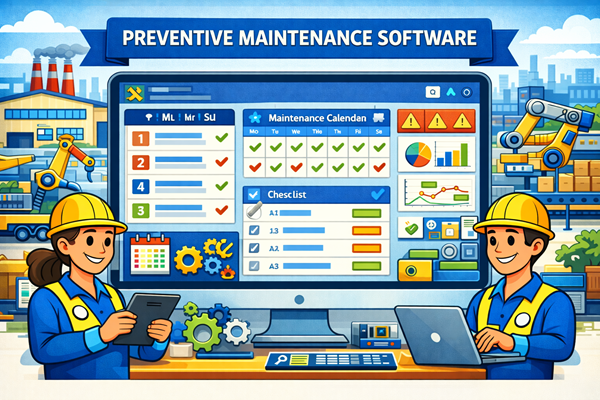
Preventive maintenance software helps organizations plan, schedule, track, and manage routine maintenance tasks so equipment is serviced before it fails — reducing downtime, cutting repair costs, and extending asset life. Instead of manual spreadsheets and reminders, it centralizes maintenance work into an automated system.
What Preventive Maintenance Software Does (Preventive maintenance checklist)
Core Purpose:
Automates scheduling of recurring maintenance tasks based on time intervals, usage, or sensor data.
Tracks and manages assets (machinery, vehicles, facilities).
Creates and assigns work orders to technicians.
Stores maintenance history for compliance and reporting.
Key Features to Look For
 Automated maintenance scheduling (time-based or condition-based)
Work order creation and tracking.
Asset & inventory management (spare parts tracking)
Mobile app access for field teams
Reporting & analytics dashboards
Alerts and reminders to technicians
Benefits
Reduced unplanned downtime and emergency repairs
Longer equipment life and improved reliability
Better resource planning and compliance tracking
Efficient technician scheduling & workload oversight
Who Uses Preventive Maintenance Software
This software is useful for:
Manufacturing plants
Facilities management (HVAC, elevators, utilities)
Healthcare & hospitals (critical equipment upkeep)
Transportation & fleet services
Construction and heavy equipment
Any asset-intensive business
Across these, preventive maintenance systems help plan regular inspections, service, and parts replacements — enhancing efficiency and reliability.
Key Features and Benefits of best predictive maintenance software for manufacturing
Work order management
Create a trackable document identifying what work needs to be done and how it should be accomplished.
Organizes maintenance requests and ensures the timeliness of completion.
Maintenance scheduling
Automatically create schedules based on time intervals or usage metrics.
Reduces the amount of missed maintenance tasks and improves asset uptimes.
Asset management
Tracks detailed information about all assets, including maintenance history, location, and condition.
Stores crucial information for complete visibility into performance and helps simplify audits for compliance.
Reporting and analytics
Track key details about your maintenance activities and analyze data.
Lets you monitor KPIs like the mean time between failures (MTBF) to gauge maintenance effectiveness.
Mobile access
Access maintenance information from your phone. Complete work orders, search asset information, and communicate with team members.
Allows technicians to complete work from anywhere without carrying a laptop.
Spare parts inventory
Maintain stock of vital supplies needed for your repairs; attach parts inventory to work orders and create purchase orders for restocking.
Prevents part stockouts or overstocking; optimizes inventory costs.
Condition monitoring
Using sensors and diagnostic tools, monitor equipment for signs of deterioration, like oil or vibration analysis.
Enables real-time data monitoring to predict and prevent failures before they happen