What is Maintenance Management Software?
Maintenance management software centralizes and automates maintenance tasks like work orders, scheduling, asset tracking, and inventory, helping businesses reduce downtime, improve efficiency, extend asset life, and ensure compliance by organizing all maintenance operations in one digital platform. Key benefits include better planning, faster troubleshooting with features like AI assistance, and real-time insights for better resource allocation. Software used by organizations to plan, track, and optimize maintenance activities for equipment, facilities, and assets.
What It Does Maintenance Software Management
Maintenance Management System Software helps teams:
Manage Assets
- Store asset details (location, manuals, warranties, history)
- Track asset performance and condition
- Monitor lifecycle and depreciation
Handle Work Orders
- Create, assign, and prioritize maintenance tasks
- Track labor, time, and completion status
- Record corrective, preventive, and predictive maintenance
Schedule Preventive Maintenance
- Automate maintenance schedules (time-based or usage-based)
- Reduce unexpected breakdowns
- Ensure compliance with safety and regulatory standards
Control Inventory & Spare Parts
- Track spare parts and stock levels
- Prevent overstocking or stockouts
- Link parts usage to work orders
Reporting & Analytics
- Analyze downtime, MTBF, MTTR, and costs
- Identify recurring issues
- Support data-driven maintenance decisions
Its main goal is to reduce downtime, extend asset life, and control maintenance costs.
- Purpose: Centralizes all maintenance activities, from scheduling repairs to tracking spare parts.
- Benefits: Reduces equipment downtime, extends asset life, improves compliance, and lowers costs.
- Industries: Widely used in manufacturing, aviation, fleet management, healthcare, and facilities.
Key Features of Best Maintenance Management Software
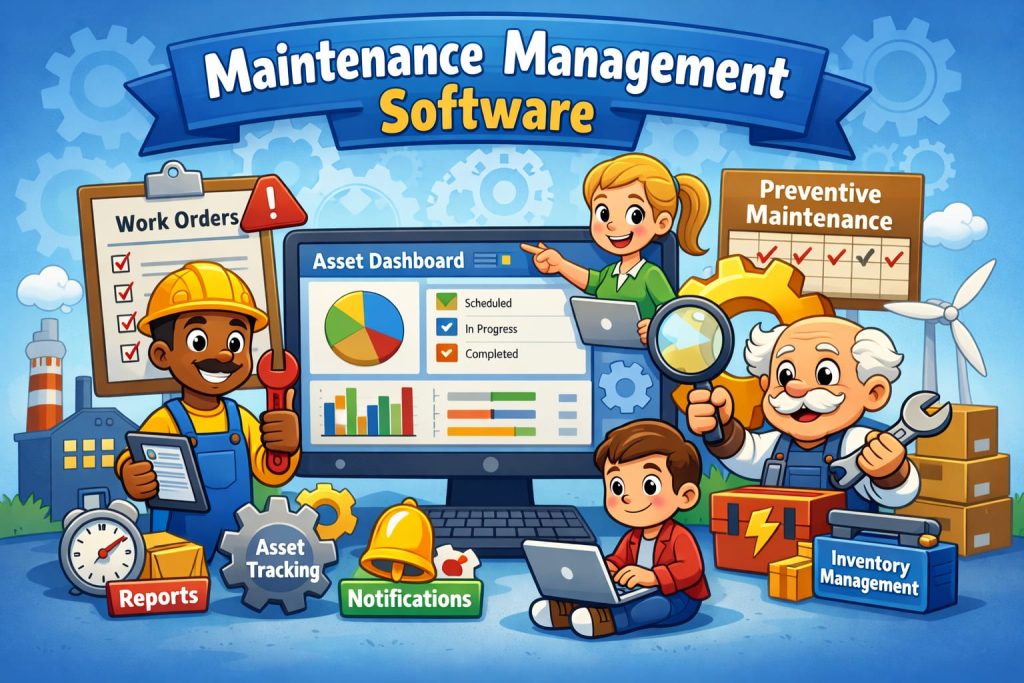
- Work Order Management: Allows users to create, assign, and track maintenance tasks efficiently, ensuring nothing falls through the cracks.
- Preventive Maintenance Scheduling: Enables scheduling of recurring maintenance tasks to prevent equipment failures and extend asset lifespans.
- Asset Management: Provides tools to track equipment details, including performance, repair history, and important documents.
- Mobile Accessibility: Many solutions offer mobile apps, allowing maintenance teams to access information and update tasks on the go.
- Reporting and Analytics: Helps organizations analyze maintenance data to identify trends, track performance, and make informed decisions.